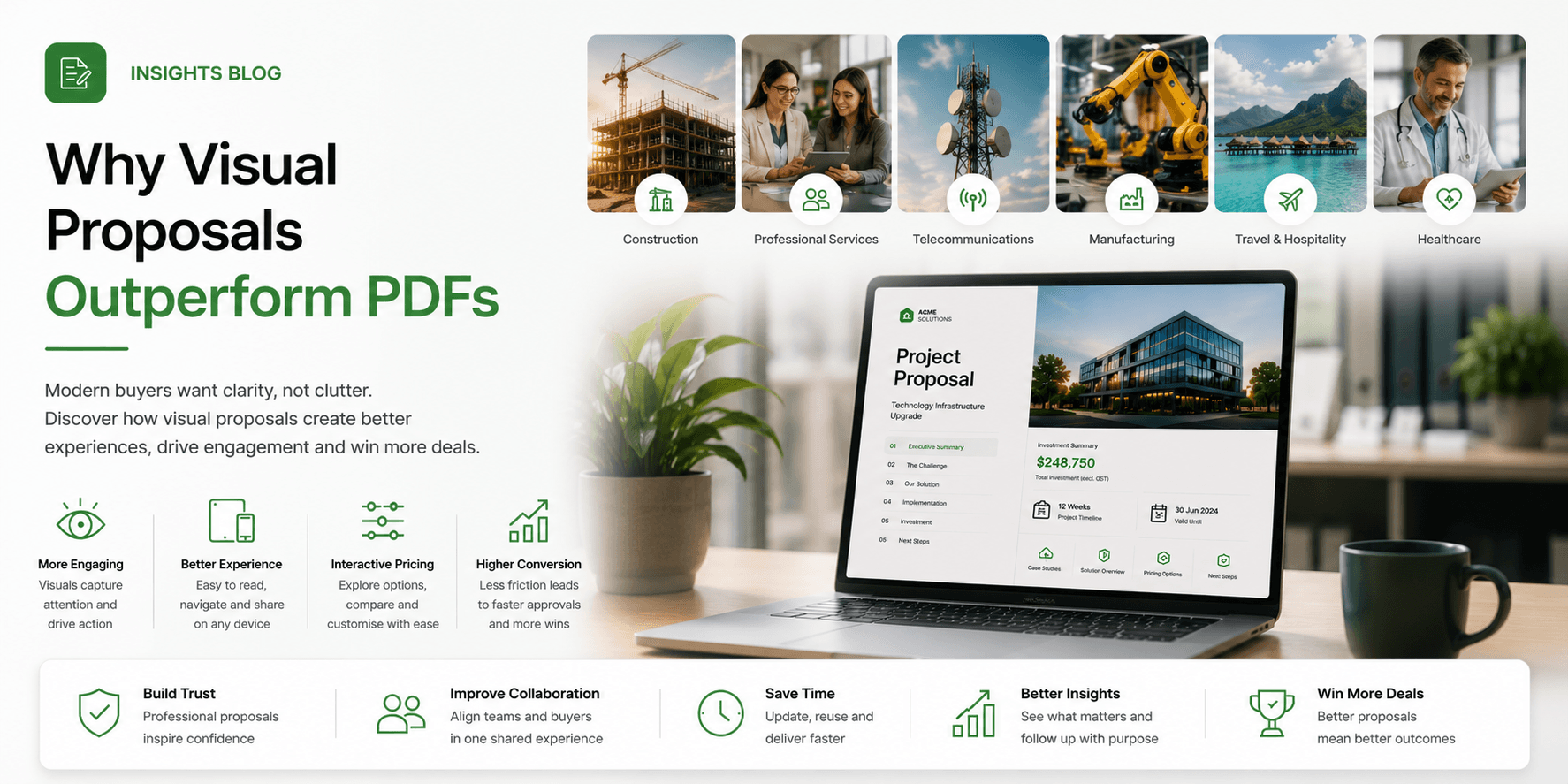
Why Visual Proposals Outperform PDFs
The way customers consume information has changed dramatically over the past decade, yet many businesses still rely on static PDF proposals built around outdated document experiences.
Traditional PDFs were originally designed for printing and document portability, not for modern digital sales engagement. While PDFs still serve a purpose for contracts and archived documentation, they often create friction during the actual buying process.
Today’s customers expect digital experiences that feel interactive, visually engaging and easy to navigate across devices. Businesses that modernise their proposal experience are increasingly discovering that visual proposals generate stronger engagement, faster approvals and higher conversion rates.
Static PDFs Create Friction
PDFs are familiar, but familiarity does not always create the best customer experience.
Many PDF proposals become difficult to review, especially when they contain:
dense formatting, large pricing tables, technical explanations, attachments and long approval processes spread across multiple pages.
Customers often need to:
zoom in on mobile devices, search manually for important sections, scroll through repetitive content or download attachments separately to understand the complete proposal.
Every additional layer of effort increases buying friction.
Visual proposal experiences reduce that friction by presenting information more naturally through structured layouts, interactive content and clearer visual hierarchy.
Modern Buyers Process Information Visually
Customers increasingly consume information through visual digital experiences rather than long-form static documents.
This shift can be seen everywhere:
websites, mobile apps, ecommerce experiences, streaming platforms and modern SaaS products are all designed around visual interaction patterns that reduce cognitive effort.
Sales proposals are no exception.
Buyers absorb information faster when proposals use:
structured sections, imagery, visual pricing, interactive elements, timelines, expandable content and clean formatting.
Businesses using visual proposal software are increasingly creating customer experiences that feel more aligned with modern digital behaviour instead of traditional document workflows.
Visual Proposals Build Emotional Confidence
Buying decisions are rarely based on logic alone.
Customers are constantly evaluating confidence, trust and perceived professionalism throughout the sales process.
A modern visual proposal immediately communicates:
organisation, clarity, operational maturity and attention to customer experience.
Poorly formatted PDFs can unintentionally create the opposite impression, even when the underlying solution is strong.
Businesses that invest in better visual presentation often find customers engage more positively because the proposal experience itself feels easier, cleaner and more commercially reassuring.
Interactive Pricing Creates Better Buying Experiences
One of the biggest limitations of static PDFs is pricing interaction.
Traditional documents force customers into passive reading experiences where pricing is fixed, difficult to compare and often disconnected from real buying scenarios.
Visual proposals can transform pricing into a far more engaging workflow.
Customers can:
explore options, compare bundles, adjust quantities, review upgrades and understand pricing pathways more naturally.
Businesses using interactive pricing and CPQ workflows are increasingly helping customers participate in the buying process instead of simply reviewing static documents.
This creates stronger engagement while reducing confusion and approval delays.
Mobile Experiences Matter More Than Ever
Many proposals are now first opened on mobile devices rather than desktop computers.
Customers review proposals:
while travelling, between meetings, onsite with clients or during quick approval discussions.
PDFs often perform poorly in these environments because they were not designed for responsive interaction.
Visual proposals built using modern digital frameworks can adapt much more naturally across:
tablets, mobile phones and desktop devices while maintaining readability and presentation quality.
Better mobile usability directly improves customer engagement and proposal completion rates.
Visual Proposals Improve Internal Collaboration
In many organisations, proposals move through multiple internal stakeholders before approval occurs.
Finance teams, procurement managers, executives and operational stakeholders may all need to review different aspects of the proposal.
Static PDFs frequently slow this process down because collaboration becomes fragmented across:
email chains, downloaded attachments, disconnected comments and multiple document revisions.
Modern collaborative proposal workflows allow businesses to centralise reviews, approvals and customer engagement inside a much more streamlined environment.
This often shortens sales cycles significantly.
Visual Content Helps Communicate Complex Solutions
Complex services are often difficult to explain effectively through plain text alone.
Industries such as:
construction, telecommunications, IT services, manufacturing and travel frequently require customers to understand multiple moving parts within a proposal.
Visual proposals make it easier to communicate:
timelines, workflows, product bundles, implementation phases, destinations, diagrams and service inclusions.
Businesses operating in industries such as construction , telecommunications and travel are increasingly using visual proposals to simplify customer understanding while improving presentation quality.
Proposal Analytics Become Possible
Traditional PDFs provide very little visibility into customer engagement behaviour.
Once the document is emailed, businesses often have no understanding of:
whether the proposal was viewed, which sections customers focused on or where engagement may have dropped.
Modern digital proposal workflows create opportunities for:
engagement tracking, approval visibility, revision management and collaborative interaction data.
This helps sales teams follow up more intelligently while improving proposal performance over time.
Visual Proposals Better Reflect Modern Brands
Customers increasingly judge businesses based on the quality of their digital experiences.
A modern website combined with outdated proposal PDFs creates a disconnect in brand perception.
Visual proposals help businesses create consistency between:
their website experience, sales process, proposal presentation and customer engagement workflows.
Businesses investing in proposal automation and document generation workflows are increasingly recognising that proposal presentation is now part of the overall brand experience itself.
PDFs Still Have a Role — But Not as the Entire Experience
PDFs are not disappearing completely.
They still remain useful for:
archived contracts, downloadable records, offline access and compliance documentation.
However, relying entirely on static PDFs for customer engagement often limits the buying experience unnecessarily.
The strongest modern sales workflows increasingly combine:
visual digital proposal experiences with downloadable documentation where required.
This gives customers both flexibility and a much better interactive buying journey.
Final Thoughts
Visual proposals outperform traditional PDFs because they align far more naturally with how modern customers consume information and make purchasing decisions.
Better usability, stronger engagement, interactive pricing, collaborative workflows and clearer presentation all help reduce friction throughout the sales process.
Businesses adopting modern digital proposal workflows are increasingly creating proposal experiences that feel more engaging, more professional and ultimately more effective at converting opportunities into revenue.